
Do your sales pipeline, renewal list, or daily follow-ups need more attention than your team can realistically provide?
Are routine tasks slowing progress because they depend on manual updates, verbal reminders, or scattered tools?
As agencies grow, the work tends to pile up unevenly. Leads build faster than they can be managed. Renewal timing becomes harder to track. Conversations slip because reminders live in different places. Even capable teams begin to feel reactive instead of steady.
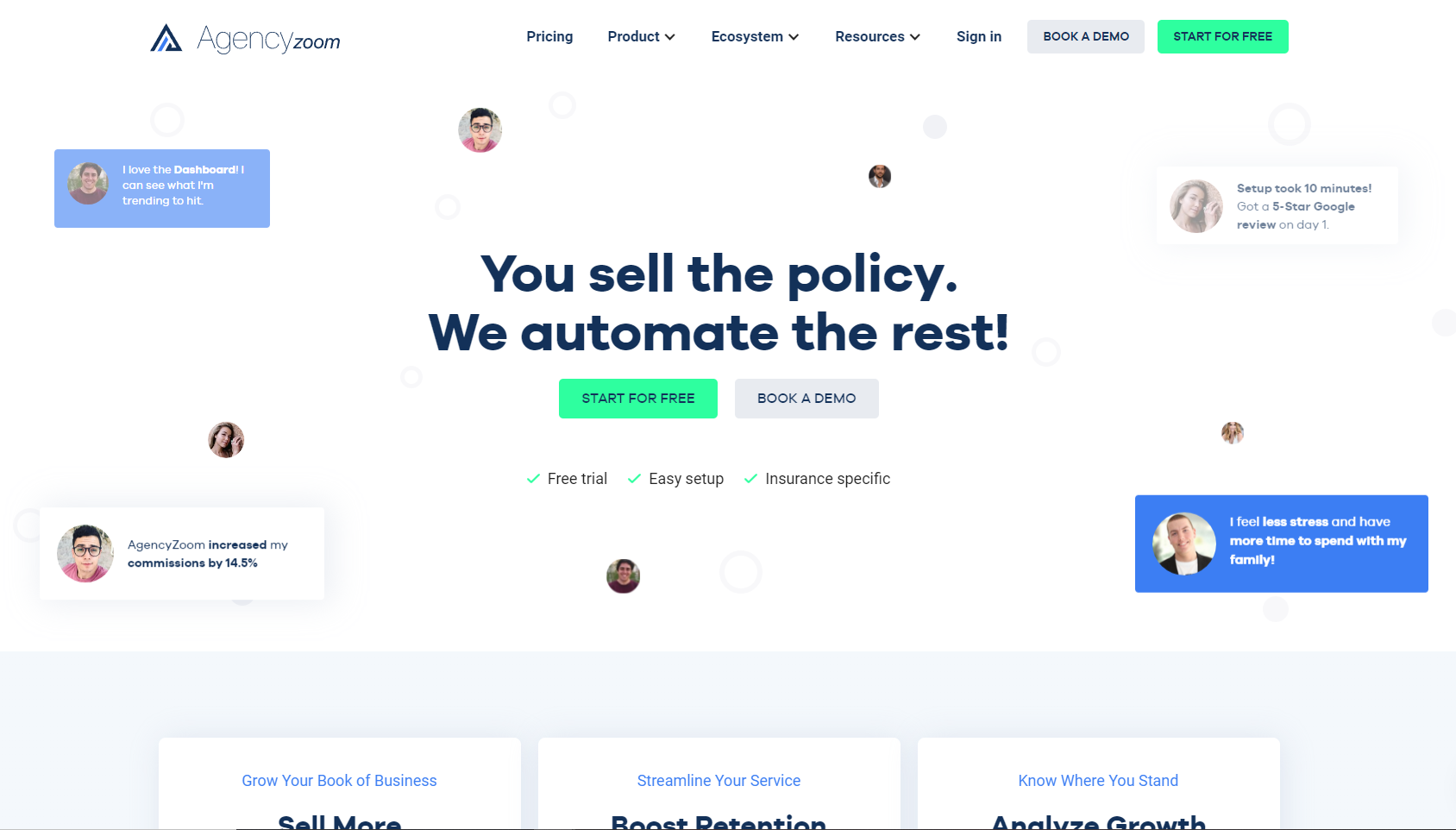
AgencyZoom helps agencies regain structure in these moments. It centralizes activity, automates routine movement, and brings sales, service, and retention into a more precise rhythm. Many agencies adopt it not because their systems are failing, but because they want predictable workflows that match the pace of their growth.
This article explains how AgencyZoom fits into insurance operations, why agencies turn to it, and what benefits teams often notice once processes become more consistent.
Why do insurance agencies look for tools like AgencyZoom?
Most agencies reach a point at which the work no longer fits within the informal systems that once served them well. Tasks begin to depend on memory. Renewal deadlines require last-minute attention. Teams lose visibility into which responsibilities are moving and which ones are stalled.
These are small signals of a system that needs more structure.
Agencies usually explore workflow tools when they want accountability and clarity.
AgencyZoom brings that clarity by placing daily activity into defined steps. Instead of relying on individual habits or personal tracking methods, teams follow a shared workflow that reduces uncertainty. The shift is subtle at first. Over time, it reshapes how the agency moves through its work.
How does AgencyZoom support sales activity and follow-up?
Sales work breaks down when the supporting tasks go untracked. Not because someone forgets what to do, but because volume eventually outpaces the informal notes and scattered reminders that used to be manageable.
AgencyZoom brings these steps into a single view. Calls, follow-ups, overdue tasks, and subsequent actions sit in one place. Agents can see exactly where a prospect stands and what needs to happen next.
This level of organization creates steadier momentum. Conversations resume more naturally. Opportunities remain visible rather than slipping into long stretches of inactivity.
Some agencies use AgencyZoom to prepare their daily outreach lists. Others rely on it for accountability. The platform adapts easily to either approach.
How does AgencyZoom strengthen renewal and retention workflows?
Renewals carry their own form of pressure. Timing matters. Communication matters. Minor delays compound quickly when the agency is busy.
AgencyZoom automates reminders, organizes renewal lists, and helps teams maintain a consistent rhythm with clients. Instead of relying on manual tracking, the work follows a predictable path that supports proactive contact.
Clients respond well to communication that arrives before questions build. It creates a sense of order during a part of the process that often feels rushed or unclear.
Consistent renewal movement is one of the first improvements many agencies notice after adopting the platform.
.png?width=579&height=579&name=ArticleWebsite%20Graphics%20Square%20(5).png)
How does AgencyZoom improve visibility for leadership?
Leaders often need a clearer view of the agency’s movement. They want to understand what work is progressing, where bottlenecks are forming, and which responsibilities require more attention.
AgencyZoom provides dashboards that make these patterns visible without creating extra reporting work for the team. The clarity helps leaders make decisions based on what is actually happening rather than what they assume is happening.
Visibility changes the quality of internal conversations because everyone is referencing the same information.
This is especially helpful when multiple producers or account managers contribute to the same workflows.
How does AgencyZoom support lead management and client movement?
When the flow of leads grows faster than expected, routing and follow-up become challenging for agencies to manage manually.
AgencyZoom organizes this part of the workflow by automatically capturing leads, assigning them according to agency rules, and prompting the next step. This removes uncertainty around ownership and helps agents respond quickly.
Many delays in lead handling occur not because the work is ignored, but because no one realized it was theirs. AgencyZoom closes this gap by making assignments and next steps visible in real time.
How does AgencyZoom help agencies sustain long-term client engagement?
Client relationships develop through steady contact. Agencies often want consistent engagement, but the pace of daily operations makes it difficult to sustain manually.
AgencyZoom automates recurring touches, including policy anniversaries, invitations for annual reviews, and reminders that support the client relationship over time. These interactions reinforce steady communication and keep the relationship moving in the right direction.
The same automation supports requests for Google Reviews, helping agencies build a more substantial online presence without creating additional work for the team.
Simple, consistent communication often leads to stronger retention because clients feel the agency is paying attention.
How adaptable is AgencyZoom for different types of insurance agencies?
Every agency structures its work differently. Some have blended roles. Some separate sales and service. Some rely heavily on automation while others continue to manage processes manually.
AgencyZoom adjusts to these differences through customizable workflows and templates. Agencies do not need to rebuild their internal structure to use it. They can begin with a small use case and expand once the team becomes familiar with the system.
Mobile access and integrations make the platform easier to adopt. Most agencies introduce AgencyZoom gradually, adding workflows as processes become more defined.
Is AgencyZoom the right next step for your agency?
Many agencies begin exploring workflow tools when daily activity becomes more complicated to manage without structure. AgencyZoom helps restore clarity by guiding sales activity, renewals, service communication, and lead handling through predictable steps.
As this structure settles in, the agency’s movement changes. Work feels steadier. Timelines become easier to manage. Leaders gain insight into workload patterns. Teams rely less on personal reminders and more on shared workflows.
For agencies pairing technology with virtual assistant support, AgencyZoom often becomes the system that keeps tasks moving while assistants maintain consistency.
Your next step is to read How Virtual Assistants Help Insurance Agencies Grow, to learn how staffing and automation complement each other in real agency environments.
Frequently Asked Questions
How long does it take for teams to learn AgencyZoom?
Most teams become comfortable with core functions within the first month. Familiarity grows quickly once the platform becomes part of the daily routine.
Does AgencyZoom replace an AMS or CRM?
It includes CRM-style features, but agencies decide how it fits with their primary management systems.
Is AgencyZoom only useful for sales?
No. Agencies rely on it for renewals, client communication, lead handling, and internal workflow structure.
Does the platform require ongoing maintenance?
Workflows may need refinement as the agency evolves. The system itself requires minimal upkeep.
Is AgencyZoom secure for client data?
It follows recognized security practices appropriate for insurance workflows. Agencies can align usage with their internal requirements.
Topics:
