Do you know what truly keeps client information safe once it leaves your office?
Have you wondered how to confirm that a virtual assistant provider’s systems are truly secure?
For insurance agencies, even a single weak safeguard can jeopardize years of client trust. Protecting client data is a direct reflection of how your agency operates. Every safeguard represents a promise to your clients that their information is handled with care.
At Lava Automation, every virtual assistant placement is backed by structured insurance training and SOC 2-audited systems. With billions in premiums supported and hundreds of agencies served, we know what it takes to protect data while improving performance.
By the end of this article, you will understand what SOC 2 covers, how it protects your agency, and why independent verification matters to every organization that handles client data.
What Does SOC 2 Compliance Actually Mean?
SOC 2 is a framework developed by the American Institute of Certified Public Accountants (AICPA). It defines how service providers manage client information across five trust service principles.
Security: Systems are protected from unauthorized access.
Availability: Services remain reliable and accessible when your team needs them.
Processing Integrity: Information is accurate and complete.
Confidentiality: Sensitive data is limited to approved users under documented rules.
Privacy: Personal information is collected and used according to clear policies.
A Type 1 audit confirms that these safeguards are designed correctly. A Type 2 audit verifies that they operate effectively over time.
SOC 2 compliance establishes accountability through independent verification and documented proof of each control.
Why does SOC 2 Matter for Insurance Agencies?
Insurance data includes financial records, policy numbers, and personally identifiable information that clients expect to remain private. Each document represents both a business asset and a legal responsibility.
Agencies also work with multiple carriers and software systems, meaning data moves through different hands every day. Each connection adds another point where risk can enter. Without clear oversight and documentation, even a minor access error can expose sensitive information or violate compliance requirements.
Strong SOC 2 controls reduce risk by standardizing how sensitive data is accessed, stored, and monitored across every system your team uses.
When an organization follows SOC 2 standards:
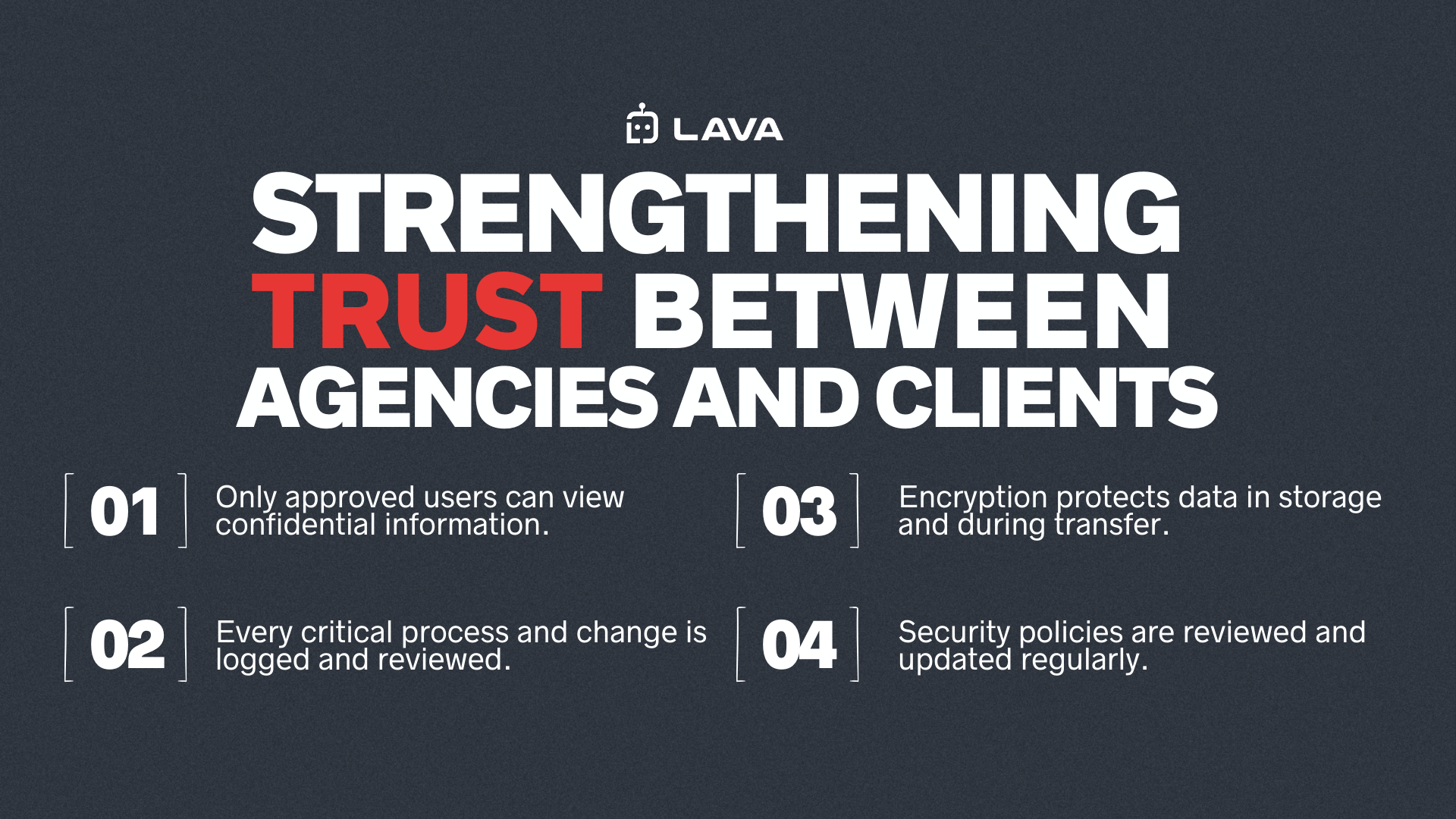
Only approved users can view confidential information.
Every critical process and change is logged and reviewed.
Encryption protects data in storage and during transfer.
Security policies are reviewed and updated regularly.
These practices protect operations and reputation. A breach risks both data and client confidence, which can take years to rebuild.
How SOC 2 Works in Everyday Agency Operations
A SOC 2 program is built around three continuous practices: monitoring, maintenance, and response. Each one reinforces the others to keep systems consistent and reliable.
Monitoring
Continuous monitoring helps detect irregular behavior early. Systems track access attempts, system updates, and failed logins so issues can be addressed quickly. Teams can use these insights to identify weak spots or recurring trends before they escalate into incidents. Continuous visibility allows small errors to be corrected before they become larger problems.
Maintenance
Security controls change as technology and regulations change. Regular patching, software updates, and procedural reviews keep systems compliant and minimize downtime. Many agencies schedule quarterly reviews to ensure that privacy rules or integrations align with SOC 2 expectations.
Maintenance keeps protection aligned with current risks.
Response
Even secure networks plan for possible incidents. A written response plan defines how to isolate affected systems, communicate with partners, and restore operations without delay. Regular testing confirms these steps work in practice and are documented.
Preparation turns uncertainty into a controlled, transparent process.
How Do Audits and Vendor Reviews Keep Data Secure?
Compliance applies to every organization and vendor involved in handling client information.
Before integration, vendors complete a risk assessment and agree to documented data-protection terms. Independent auditors then confirm that controls are being followed and that vendor relationships remain compliant.
Auditing third-party vendors eliminates blind spots and reinforces accountability.
To see how verified safeguards work inside agency systems, read How Lava Automation Protects Insurance Agency Data for a deeper look at how compliance and automation align within our security framework.
How SOC 2 Strengthens Client Confidence
Meeting SOC 2 standards demonstrates to clients, carriers, and partners that your agency values responsible data management. It shows that information security is a consistent, documented process built into daily operations.
Clients notice when data handling feels structured and professional. They experience fewer service interruptions, faster responses, and clear documentation when requests involve personal or financial details. Each of these moments builds confidence that their information is protected under proven systems.
Verified compliance demonstrates a documented and visible commitment to client trust.
Keep Your Agency Secure with Lava
SOC 2 compliance gives insurance agencies confidence that data is protected, policies are enforced, and systems perform as expected. It replaces uncertainty with clarity.
One overlooked safeguard can put client trust and regulatory standing at risk. When controls are verified, agencies can focus on growth knowing that their data management meets industry and legal expectations.
At Lava Automation, security is integrated into every workflow, from automation to assistant onboarding, so agencies never have to question how their information is handled. Our verified SOC 2 framework keeps data safe, systems reliable, and client relationships protected.
Continue learning with How Lava Automation Handles Virtual Assistant Training to see how our preparation process ensures consistent, compliant performance from the very first day.
Frequently Asked Questions
What does SOC 2 compliance mean for agencies?
It means a provider’s systems are audited for security, availability, and confidentiality according to recognized standards.
What is the difference between SOC 2 Type 1 and Type 2?
Type 1 confirms that controls are properly designed. Type 2 verifies that those controls operate consistently over an annual period.
How does SOC 2 help with client trust?
It creates transparency and documentation that proves data is protected under an independent standard.
What happens if a security incident occurs?
A documented response plan activates immediately to detect the issue, mitigate the risk, restore service, and investigate the root cause.
